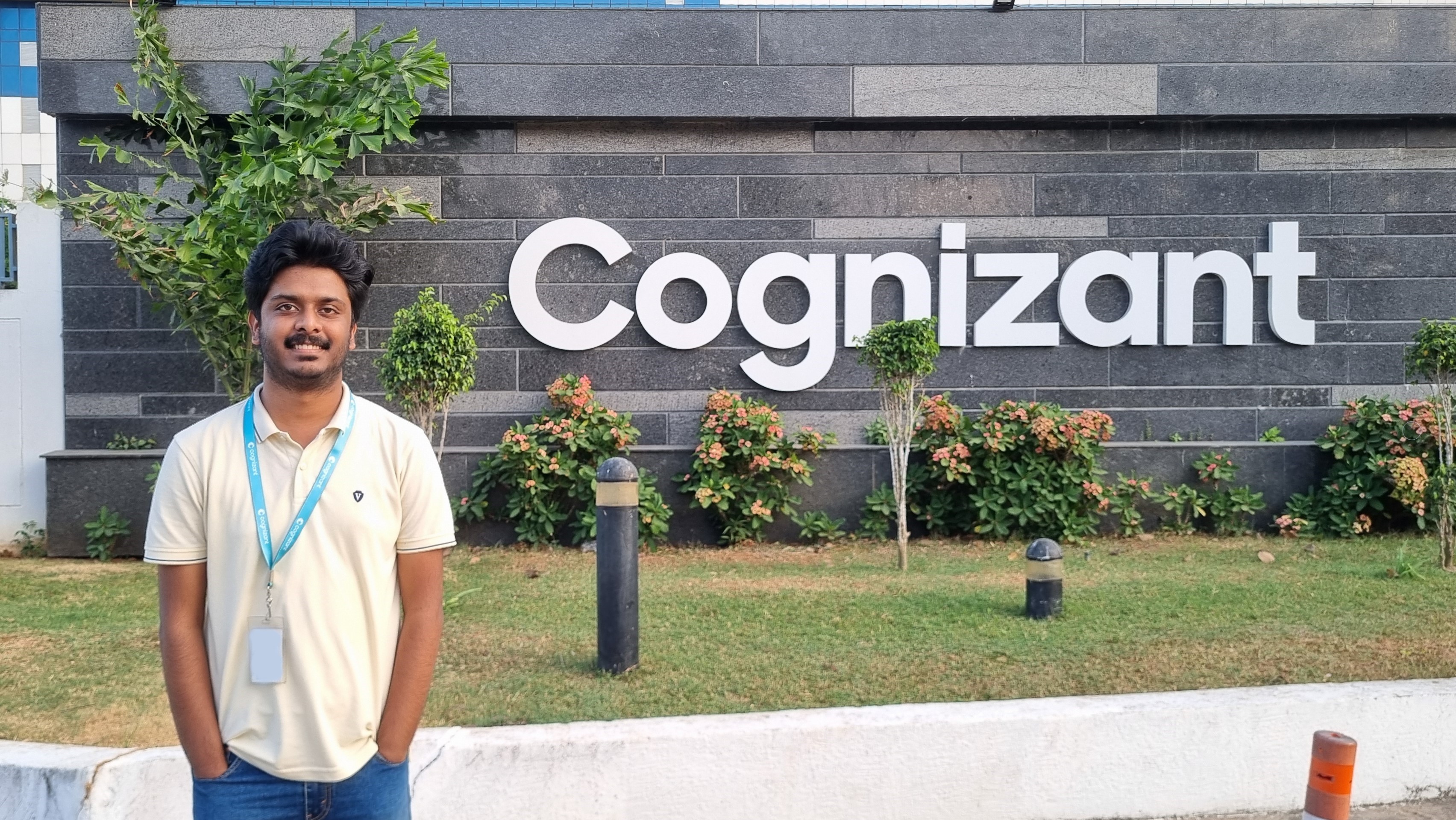
My Cognizant GenC Next Internship — An Honest Account

A first-hand account of my Cognizant GenC Next internship from January to May 2026 — what the program looks like, what a day actually feels like, and what I'd tell anyone heading into it.
When I got my internship offer from Cognizant in January 2026, I had a rough idea of what corporate life looked like. What I didn't expect was how much the next few months — January to May 2026 — would actually teach me — not just technically, but about how real teams work, how to lead without a title, and what it means to show up every day with ownership.
Here's everything, start to finish.
Day One — Two Campuses, One Day
The first day started at the Tambaram campus for verification and orientation sessions — paperwork, introductions, and getting a feel for what the next few months would look like. It was a mix of nerves and excitement, the kind of day where everything feels new. From day two onwards, everything moved to the Siruseri campus, which became the base for the rest of the internship.
The Domain Assignment
Under the GenC Next program, interns are assigned domains based on their profile. From what I gathered from others in my cohort, some of the domains included:
- AWS Cloud
- Java Testing
- Java Full Stack — Angular
- Java Full Stack — React
I was assigned Full Stack Java React. The overall program runs for about 12 to 16 weeks in total, with the duration varying slightly between domains.
How the Training Was Structured
The first 3 to 5 days were dedicated to behavioural training — communication, professional etiquette, and workplace dynamics. After that, the technical training kicked in, with behavioural sessions woven in throughout.
The structure was well thought out — it wasn't just code, code, code. There was consistent focus on soft skills, communication, and feedback all the way through.
The Academic Project
Every intern is assigned an academic project during the program. This isn't a throwaway assignment — it's the centrepiece of both your mid and end of internship interviews. You build it, you own it, and you present it.
Treat it like a real production project from day one. The interviewers will ask you to walk through every decision you made.
The Evaluations
There are structured evaluations during the internship — a mid-point review and a final interview, both assessing your learning and project progress. Depending on your domain, there may also be a technical assessment after the final interview that needs to be cleared.
The process is well structured and transparent — you'll always know what's coming and what's expected of you.
The Project We Built
Our team of 5 interns built a full-stack Bank Management System from the ground up:
The project covered full-stack development end to end — backend microservices, API gateway, authentication, and a React.js frontend. It was a solid, real-world application that touched almost every part of the tech stack we were trained on.
Building it as a team made it even more valuable — we had to divide work, review each other's code, and make sure everything fit together.
I took on peer team lead responsibilities — coordinating task breakdowns, conducting code reviews, and keeping the team aligned. Nobody assigned the role to me. I just started showing up with ownership and the team responded to it.
What a Day Actually Looked Like
8:30 AM to 6:30 PM. Ten hours a day, five days a week.
Free pantry with coffee, tea, and everything in between — a small thing that genuinely made a difference on long days.
The program had Scrum Masters and a Tech Lead guiding the teams throughout. There were also regular leadership connect sessions — calls with senior leaders at the start of the internship and again toward the end, focused on sharing learnings, getting feedback, and making the transition into corporate life as smooth as possible.
The People
An internship is only as good as the people around you. I was lucky.
Our cohort of 15 interns was genuinely great — collaborative, energetic, and the kind of group that makes even the tough days worth it. Going to miss that energy.
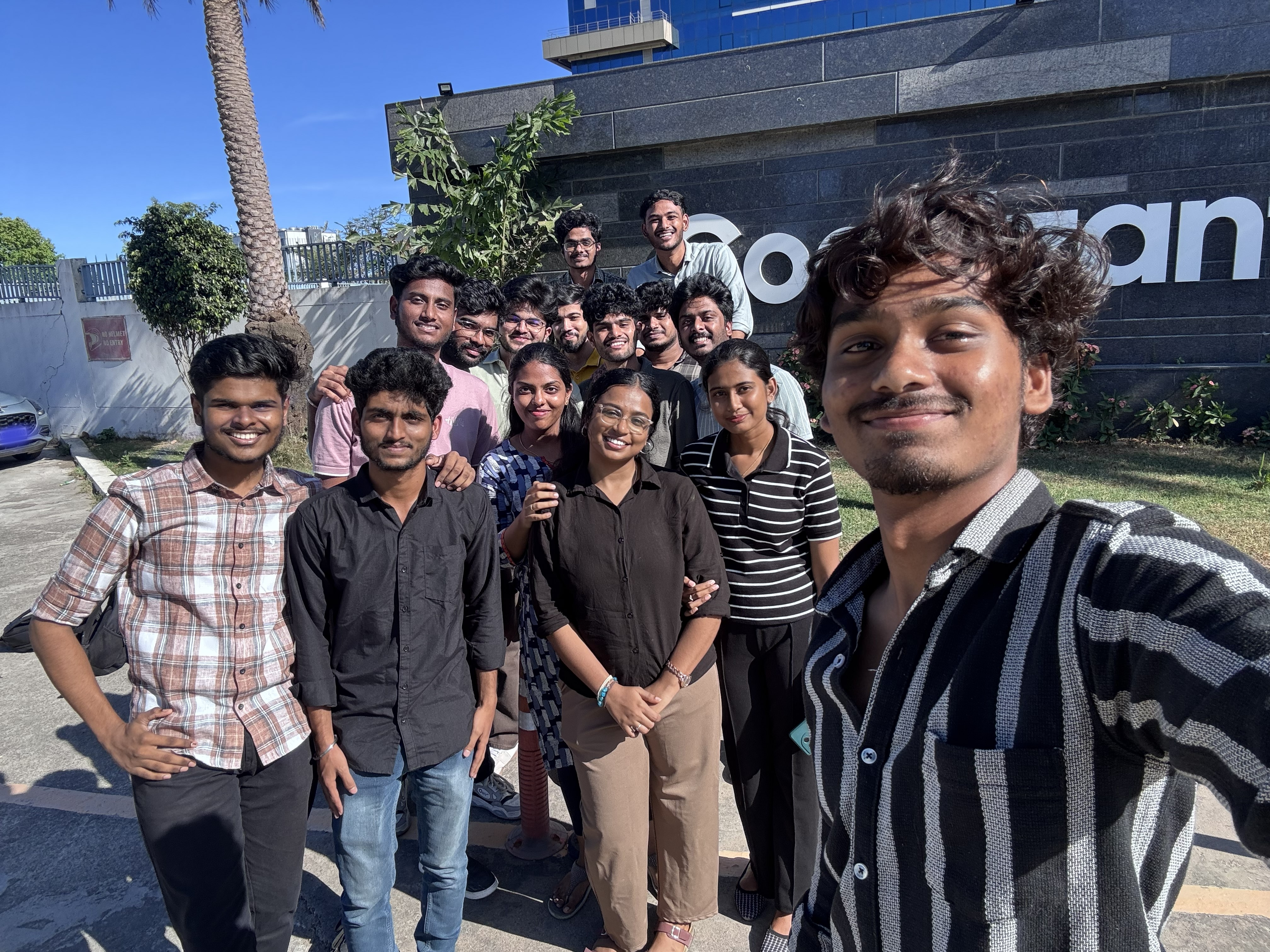
Grateful to my Mentor, Tech Lead, Batch Owner, and Technical Trainer for the guidance throughout. Each one of them contributed to making this experience what it was.
What I'm Taking Away
Corporate life is a different game. The technical skills matter — but so does how you communicate, how you take ownership, and how you show up consistently every single day.
If you're heading into a GenC Next internship, here's my honest advice:
- Start your academic project early and build it properly
- Prepare for the technical evaluations — brush up on your domain stack
- Ask questions, take notes, and don't wait to be told what to do
- Make the most of the leadership connect sessions — they're more valuable than they seem
Overall — a great start to corporate life. Excited for what comes next.
Have questions about the GenC Next program? Drop them in the comments of my LinkedIn post and I'll answer when I'm free — happy to help!
Enjoyed this post?
Thanks for reacting!
Read next
Back to all posts
Inside Cognizant's Digital Nurture Hiring — A 2025-26 Intern's Perspective
Everything a CSE student needs to know about Cognizant's Digital Nurture program — from aptitude rounds to final interviews, straight from a 2025-26 intern.
.png)
What Campus Doesn't Teach You
Everything I learned the hard way — from cracking placements and surviving Cognizant's Digital Nurture program to leading a team of interns and why AI is the skill you can't afford to ignore anymore.
I Built a Desktop App to Watch My Own Security Camera Footage
How I reverse-engineered the Godrej Ace Pro camera format and built a free, open-source Electron app to browse, play, and export footage on my own terms.